What Does RNG Mean?
RNG means random number generation. When an eligible reward is rolled, the server makes a random check. A successful check can lead to a reward, subject to that activity's selection rules. Your account does not build up a hidden luck bonus simply because you have gone dry on an ordinary NPC drop.
A final chance of 1 in 100 means a 1% chance on each eligible reward roll. It does not promise the item on your 100th kill. You could get it immediately, receive several close together, or go hundreds of rolls without it. The average across a large number of rolls is one success per 100 rolls.
Keep three things separate: an item's chance on a check, the number of reward rolls you receive, and the quantity of the item awarded. A bonus can change one of these without changing the others.
How Ordinary NPC Loot Is Selected on Slayora
Slayora uses several reward systems. For the ordinary NPC loot path, non-guaranteed entries are checked individually. Entries that pass become candidates, and one successful candidate is chosen at random for that normal reward roll. If no entry passes, an eligible entry with the lowest adjusted denominator can be used as the fallback.
Guaranteed entries, such as an NPC's guaranteed bones, are handled separately. They do not compete in that candidate pool. Receiving extra normal rolls does not automatically multiply every guaranteed item.
Why a listed 1 in X can differ from the final item chance: suppose a hypothetical table has a rare entry that passes at 1 in 100 and a common entry that passes at 1 in 2, after all adjustments. The common item is also the fallback.
- The rare entry passes on 1% of rolls.
- When it passes, the common entry fails half the time, so the rare item wins directly.
- The other half of the time, both pass and the rare item has a 50% chance of being selected.
- The final rare-item chance is 1% × (50% + 50% × 50%) = 0.75%, or about 1 in 133.33 per normal reward roll.
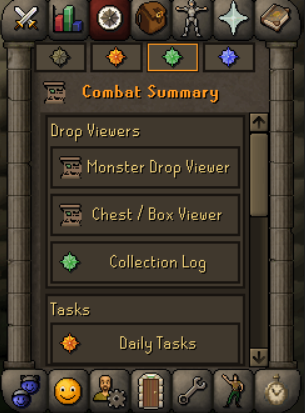
This example is illustrative, not the rate of a named boss. It shows why the full eligible table matters. The Drop Viewer is a useful reference, but an entry's displayed rate is not a universal promise of its exact delivered chance per kill. Some reward paths apply adjustments or selection rules that the viewer does not fully represent.
What Your Drop-Rate Bonus Actually Changes
On supported ordinary NPC checks, your eligible drop-rate contributions add together, the total is rounded down to a whole percentage, and the active additive bonus is capped at 90%. That bonus reduces the denominator of an entry's check.
Adjusted denominator = round down [starting denominator × (1 − bonus / 100)]
For example, an already prepared check denominator of 100 with a 20% additive bonus becomes 80: a 1 in 80 check. Its check chance rises from 1% to 1.25%. A 50% bonus makes that denominator 50. A “20% drop-rate bonus” does not add 20 percentage points to the item's probability, and it does not guarantee a rare.
There is also an earlier server adjustment: most ordinary NPC entries start with half their stored base denominator, rounded down. Corp, Nex and fixed special rewards have exceptions. With a stored base of 100, no other special modifiers and a 20% bonus, the ordinary path is 100 → 50 → 40. These are entry-check denominators; candidate selection still follows.
A supported timed 5% drop-rate boost is another step: it multiplies the denominator by 0.95 before the additive bonus, rounding down at that step. It does not add five points to the additive total. For a prepared denominator of 100 and a 20% additive bonus, that combination is 100 → 95 → 76, before any later special adjustments.
Other rules can change the result: eligible skulled public Revenants have their own modifier; many entries configured for loot announcements apply a separate ×1.5 denominator adjustment; some clue drops have a specific pet modifier; fixed keys can have eligibility restrictions. Announcement modifiers depend on the entry, not on how long you have gone dry. The final check denominator is kept at a minimum of 1.
Where the Additive Bonus Comes From
Game mode contribution to the ordinary PvM bonus
| Mode | Contribution |
|---|
| Easy | 0% |
|---|
| Intermediate | 10% |
|---|
| Hard | 18% |
|---|
| Extreme / Insane | 30% |
|---|
| Realism | 50% |
|---|
| God Mode | Does not receive these drop-rate boosts |
|---|
One contribution from your highest eligible donator rank
| Rank | Contribution |
|---|
| Donator | 0% additive bonus; separate extra-roll benefit |
|---|
| Super / Elite | 2% / 3% |
|---|
| Noble / Gold | 5% / 6% |
|---|
| Platinum / Legendary | 7% / 8% |
|---|
| Supreme / Diamond | 10% / 15% |
|---|
- Active pet: Slayora's Dragon or an eligible Diamond Corrupted Nechryarch contributes 5% when its effects are enabled. Combining those two effects does not turn that direct contribution into 10%.
- Equipped ring: Ring of Slayora contributes 2%; Ring of Loot or Monarch's Ring contributes 5%. You equip one ring, so these ring contributions do not stack with one another. An enabled Treasure Hunter item perk adds its stored level separately.
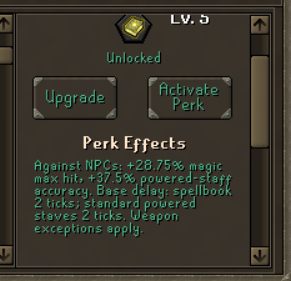
- Gold Digger: Levels 1–5 contribute 7.75%, 11.5%, 15.25%, 19% and 22.75% outside Wilderness and PvP areas. Fractions are retained until the combined additive total is rounded down.
- Wilderness risk: Qualifying genuinely unprotected, tradeable Tier 4+ items can instead contribute 2% each, up to 20%. Protected items and pets do not count. Gold Digger is unavailable there.
- Permanent scrolls: Eligible drop-rate scrolls add 5 or 15 points to the stored bonus, while the active additive calculation still caps at 90%.
- Ember Rush: Its active drop-rate effect contributes another 5 points. Its extra-roll and pet effects are separate benefits.
Worked loadout: Intermediate 10 + Diamond 15 + one eligible active pet 5 + Ring of Loot 5 + Gold Digger level 5 at 22.75 = 57.75%, rounded down to 57%, assuming those effects are enabled and you are outside the restricted areas. Add an eligible permanent 15-point bonus and the total becomes 72.75%, used as 72%. Lower donator ranks are not added on top of Diamond.
God Mode returns zero for this additive bonus and skips the optional normal-NPC extra rolls described below. It also does not receive RNG Rush boosts. An encounter can still have its own baseline rewards or mode restrictions. See the Donator Benefits guide for the wider rank benefits.
RNG Rush and Ember Rush Are Different
RNG Rush lasts 15 minutes. The community earns a Rush when either 100 qualifying vote progress or 300 qualifying donation progress is reached. Donation progress is the event's credited amount, not a count of 300 purchases. Check the event timer for the current counters and active countdown.
Further completed goals can queue additional Rushes, which run in sequence. There is no daily Rush limit. Incomplete remainder progress resets at server-local midnight; completed goals already earned are retained.
On supported checks, RNG Rush halves the already adjusted denominator, rounding upward. A denominator of 100 becomes 50; 101 becomes 51. It cannot go below 1. This is approximately twice the check chance, with rounding affecting small or odd denominators. It is a separate operation, not another 50 points added to your additive total.
Example: a prepared denominator of 100 with a 20% additive bonus becomes 80, then 40 during RNG Rush. In the earlier ordinary-table example that first halves a stored base of 100, the path becomes 100 → 50 → 40 → 20. Candidate selection still determines the final normal item.
Supported handlers that work directly with a probability instead double that calculated probability, capped at 100%. This does not mean every activity uses the ordinary NPC formula.
Ember Rush activates its own collection of boosts. For supported normal loot it supplies the separate 5-point additive contribution and a 1 in 3 chance of one extra roll. Its supported pet effect reduces the pet denominator by 15%. It does not duplicate the same underlying Camel boost when both labels refer to that effect. Click its fire timer to see the currently active boosts.
Extra Rolls, Double Drops and Item Quantity
An extra normal roll makes another selection from the eligible normal loot system. It can award a different item. It does not simply copy the first reward, and it does not automatically create another pet roll.
Ordinary NPCs generally start with one normal roll. Some encounters start with more: Zulrah has an additional baseline roll, and certain encounters or MVP rewards have their own rules. For eligible players, Ring of Loot or Monarch's Ring has a 25% chance to add a normal roll. The timed Double Drops effect then doubles the rolls accumulated at that stage.
The donator extra roll is applied after that timed doubling. Diamond adds one guaranteed normal roll; lower eligible donator tiers can add one when their rank's chance succeeds. Ember Rush and Securing the Bag are later opportunities for an additional roll. Securing the Bag's level 1–5 chances are 11.25%, 20%, 28.75%, 37.5% and 46.25%.
A one-roll NPC, with no other extra-roll effects
| Setup | Normal reward rolls |
|---|
| Baseline | 1 |
|---|
| Timed Double Drops | 2 |
|---|
| Diamond | 2 |
|---|
| Diamond + timed Double Drops | 3: baseline 1 × 2, then Diamond +1 |
|---|
If an item has a hypothetical final 1% delivered chance per independent normal roll, two rolls give a 1.99% chance of at least one; three give 2.9701%. Two successes remain possible. Two rolls do not guarantee a rare, and their chance of at least one is not exactly 2%.
A quantity-copy effect is different. For example, Double Drop Luck has a separate 5% chance to copy an eligible kill-count boss drop. This copies the selected item instead of selecting a new random item. A larger herb stack also does not itself imply a better chance of receiving a rare weapon.
Raids, Pets, Clues and Chests
Different reward systems use different formulas. In a weighted pool, an entry's chance within that pool is its weight divided by the total eligible weight. If you must first hit a rare category, multiply the stages to find the final chance.
Hypothetical example: a 10% chance of a purple reward, followed by a 5% chance of your desired item within that purple pool, gives 10% × 5% = 0.5%, or 1 in 200 overall. The 5% figure alone is not that item's chance per completed raid.
- Chambers of Xeric: Purple rewards use a points-based calculation. The pre-Rush purple probability is capped at 45%; eligible RNG Rush can double that calculated probability. Olmlet has a separate conditional pet check after a purple reward.
- Theatre of Blood and Tombs of Amascut: Dedicated formulas account for factors such as difficulty or invocations, deaths, party rules and encounter type. Raid-specific bonuses and pet rolls apply. Do not transfer the ordinary NPC additive formula or Diamond normal-roll count to every raid chest.
- NPC pets: Pet acquisition uses separate checks and pet-roll counts, with its own eligible boosts. Normal loot rolls and the timed Double Drops effect do not multiply that pet loop. Your normal loot bonus is only part of a supported pet calculation.
- Pet rarity: After a pet is awarded, its rarity is a separate selection: Common 45%, Uncommon 25%, Rare 15%, Epic 7%, Legendary 5%, Mythic 3%. A 3% Mythic rarity chance does not mean a 3% chance of obtaining a pet on every boss kill.
- Clue caskets: Weighted rewards and separate pet, Mimic and master-clue checks use their own rules. The ordinary NPC drop-rate bonus and RNG Rush are not applied by the clue reward handler. Saving a casket gives another opening opportunity; it does not improve an item's weight in the current opening.
- Crystal chests: Rarity-pool checks come before the item choice within the selected pool. Barrows has a different formula based on brothers killed and supports general drop-rate and RNG Rush adjustments.
Eligibility still matters: kill credit, encounter mode, specific reward conditions and special cooldowns can affect whether a check is available. One blanket rate cannot describe all these activities.
Dry Streaks and Explicit Milestones
For ordinary NPC loot, going dry does not improve your next roll while the eligible table and modifiers stay the same. If your final chance is 1 in 100, it remains 1% on the next eligible roll even after 200 misses. Relogging, opening the viewer or waiting for a “lucky moment” does not build up that chance.
Some content has explicit exceptions. Vorkath has a one-time head reward tied to reaching 50 recorded kills. Hydra's ring components rotate after successful component drops. Certain Mystery Crates and Promotion Packages can use an incentive pool on the first eligible opening or at a shared opening milestone. That guarantees use of the incentive pool, not a particular rare item, and it is not a universal guarantee every five boxes.
For a constant final 1 in 100 chance, with one independent roll per kill:
Hypothetical final 1 in 100 delivered chance
| Eligible kills | At least one drop | Still no drop |
|---|
| 1 | 1% | 99% |
|---|
| 100 | 63.40% | 36.60% |
|---|
| 300 | 95.10% | 4.90% |
|---|
| 500 | 99.34% | 0.66% |
|---|
At 100 rolls the expected number of drops is one, but about 36.60% of players following this same hypothetical setup would still have none. Others receive multiple drops. An average is not a personal deadline.
Try the Drop Chance Calculator
Enter a hypothetical final delivered chance per independent eligible roll, then change the kill count and fixed number of rolls per kill. This calculator does not read your account or reconstruct an NPC's full table. Do not enter a raw Drop Viewer entry rate as though candidate selection and every activity-specific adjustment have already been included.
At least one = 1 − (1 − 1 / N)K × R
Still dry = (1 − 1 / N)K × R
Expected drops = K × R / N
Here, N is the final denominator, K is the number of eligible kills or attempts, and R is the fixed number of independent rolls per kill.
Would an OSRS-Style System Make Drops Easier?
A clearly defined table can make rates easier to understand and balance. It does not automatically make items easier to obtain. A final 1 in 100 chance is 1% regardless of the game's name; a final 1 in 1,000 chance is 0.1%.
OSRS also uses encounter-specific table stages and exceptions, rather than one formula for every reward. Jagex's official explanation of the Desert Treasure II drop system shows unique-table selection, weighted outcomes, separate pet checks and special progression rules.
Removing competition between successful candidates could increase a particular item's final chance if we kept its existing entry-check rate unchanged. Preserving its actual final chance would preserve its expected rarity. Any future redesign would need to calculate the full table, retain intended bonus behavior and show the resulting delivered rates clearly. This guide explains Slayora's current system; it does not announce a drop-system conversion.